Introduction
If you’re looking to protect your vehicle’s paint, you’ve probably come across two popular options: paint protection film (PPF) and ceramic coating. Both are designed to protect your vehicle’s exterior and keep it looking new, but they work in very different ways.
For drivers in Atlanta and North Georgia, protecting your vehicle’s paint is especially important due to intense sun exposure, road debris, and daily wear. Understanding the differences between PPF and ceramic coating can help you choose the right protection for your vehicle.
What Is Paint Protection Film?
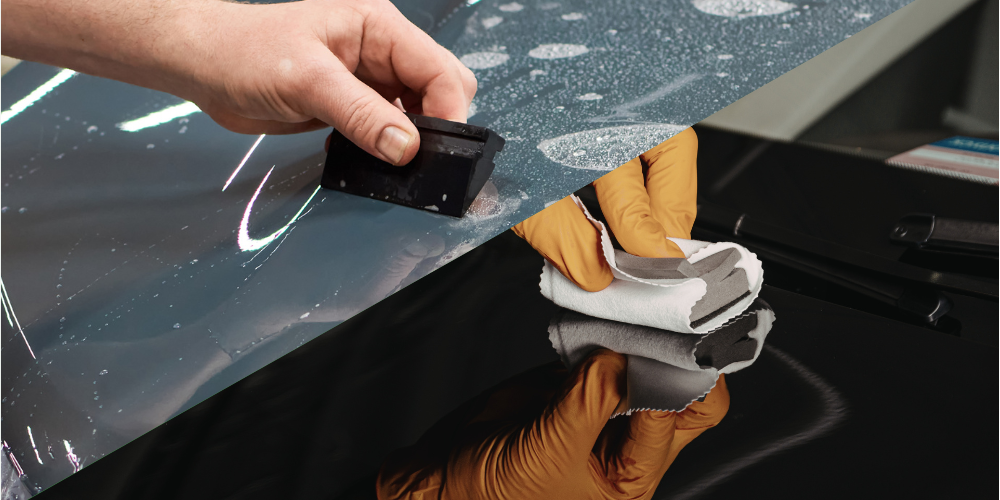
Paint protection film is a clear, durable urethane film that is applied directly to your vehicle’s painted surfaces. It acts as a physical barrier between your paint and outside elements.
PPF is commonly installed on high-impact areas such as:
- Front bumpers
- Hoods
- Side mirrors
- Fenders
- Door edges
One of the most impressive features of modern paint protection film is self-healing technology, which allows minor scratches to disappear when exposed to heat.
Benefits of Paint Protection Film
Paint protection film offers several advantages:
- Protects against rock chips and road debris
- Prevents scratches and swirl marks
- Self-healing properties
- Preserves original paint condition
Because it physically absorbs impacts, PPF provides the highest level of paint protection available.
What Is Ceramic Coating?
Ceramic coating is a liquid polymer coating that is applied to a vehicle’s exterior. Once cured, it bonds with the paint and creates a protective layer.
Unlike PPF, ceramic coating does not provide impact protection. Instead, it enhances the surface of the paint and improves its resistance to environmental contaminants.
Benefits of Ceramic Coating
Ceramic coatings provide several benefits:
- Hydrophobic surface that repels water
- Easier cleaning and maintenance
- Protection against UV rays
- Enhanced gloss and shine
Ceramic coating is especially helpful for keeping vehicles cleaner and maintaining a deep, glossy finish.
Key Differences Between PPF and Ceramic Coating
Impact Protection
Paint protection film provides physical protection against rock chips, scratches, and road debris, while ceramic coating does not.
Appearance
Ceramic coatings enhance gloss and depth of color, giving the vehicle a polished appearance.
Maintenance
Ceramic coating makes washing easier because water and dirt slide off the surface more easily.
Durability
PPF can last 5–10 years, while ceramic coatings typically last 2–5 years depending on the product and maintenance.
Which Option Is Best for Your Vehicle?
The best option depends on how you use your vehicle and what type of protection you want.
Choose paint protection film if you want:
- Maximum protection from rock chips
- Protection for high-impact areas
- Long-term preservation of your paint
Choose ceramic coating if you want:
- Easier maintenance and cleaning
- Enhanced gloss and shine
- Protection from UV rays and contaminants
Many vehicle owners actually choose both. PPF protects high-impact areas, while ceramic coating is applied over the rest of the vehicle for shine and easier maintenance.
Why Protection Matters for Atlanta Drivers
Vehicles in Atlanta and North Georgia face constant exposure to:
- Strong UV rays
- Road debris from highways
- Pollen and environmental contaminants
- Heat and humidity
Protective treatments like paint protection film and ceramic coating help preserve your vehicle’s appearance and maintain its long-term value.
Conclusion
Both paint protection film and ceramic coating offer valuable benefits for vehicle owners. PPF provides unmatched protection against physical damage, while ceramic coating improves appearance and makes maintenance easier.
For many Atlanta drivers, combining the two solutions provides the best overall protection for their vehicle’s paint.